Showing posts with label words. Show all posts

Saturday, 5 October 2019

Reflection on ‘Aphorism 3’ (Do not ask for lessons)

Do not ask for lessons; all I can give are opportunities.”
Aphorism 3
This is an interesting one, to be sure. To understand what it might be taken to mean, we must consider the possible meanings of different parts of it. For instance, what is meant by ‘lesson’, and what by ‘opportunities’? More profoundly, in whose voice should it be taken as being? At the same time, it is a very simple statement that seems to have a fairly straightforward meaning, at least from the point of view of certain approaches to education. So straightforward that it might be considered a pat answer itself, in fact (though that adjective, pat, has some divergence in meaning that means it might be appropriate whether the explanation is trivial and misguiding or simple and correct).
Let us first consider that straightforward answer. A popular view of education, of the process of learning, is that the only true agent in the process is the learner. Constructivist theories of education hold that knowledge cannot be transmitted, only constructed by the individual. In that context, even modified in such variants as social constructivism (where knowledge construction takes place in the context of interaction between individuals), a more traditional ‘lesson’, in which knowledge is transmitted from teacher to student, is impossible – or at least ineffective. The educator instead provides opportunities for the construction of knowledge, facilitates the process. It might be said, then, that this aphorism is simply a truism in the context of constructivist educational theory. However, in receiving it as ministry it behoves us to look beyond that simple explanation. That is where we must consider the possible meanings, beyond that of constructivism, and the voice of the statement.

Thursday, 7 February 2019

Coining a New Name

I am indebted in writing this piece to several friends (not all of whom are Friends) helping me puzzle out the nuances of a dead language. Special mention must go, however, to my sister-in-law, and to the helpful folks of the Latin Stack Exchange. I am no scholar of ancient languages myself, though I dabble (as I do in many things). Any errors in how I have made use of Latin are my own, and as I've had to be a little creative I expect there are some.
Image shows a small portion of a page of an old printed Latin-German dictionary. Latin words are in Roman script, while the German text is in Gothic script. Part of the entry for "Avis" is in focus.
Much conversation goes on among liberal Friends, at least recently in Britain, concerning our range of names for the Divine. This is why there's a tag for it on this blog, and has become a startling focus of conversation around our theological diversity. Some of the worry – and some of the excitement – about the upcoming revision of Britain Yearly Meeting's Book of Discipline even relates to this. Some of the differences in name reflect the different ways we have of thinking about the Divine, and sometimes using the same name conceals that difference.
We have the old names – God, the Father, Christ, and more esoteric terms early Friends were fond of, such as Seed. Then we have names that are old, but new to Quakers, as other faith traditions feed into our own, and they are too many and varied for it to be easy to pick out a few. We have names that reflect theological liberalism and universalism, delightfully non-committal like my own go-to name, the Divine. We have terms that were used by early Friends and are used today with different nuance, like Light (for early Friends it was often the Light of Christ, or Inward Light; today it is often Inner Light, and for both it would just be shortened to “Light”). Maybe it's time for something new. Something that reflects what we are united on, or at least as united as we ever are, without claiming anything else.

Thursday, 24 January 2019

Don't Replace "God" With "Good"

An image of the statue of "God the Father" at Saint Saviour's Cathedral, Bruges, fading from the top right to the bottom left into an off-white background with an image of yellow "smiley" with a "thumbs up" gesture.
This might seem a strange title for me. After all, I rarely use the word “God” in reference to my own beliefs – surely I should be happy to see it used less? Well, yes and no.
Let's start by setting some context. I don't want to see Quakers stop using the word God, let's get that clear. I do think sometimes we should think about whether it's the right word to use in any given situation, especially in corporate statements, but I'm all about using the full range of language in our collective writing. I think there's lots of other words and phrases we can use, and they should more or less all get a look in.

Thursday, 19 July 2018

What I Fear

A peacock stands on a stone pedestal in a pleasant garden, with a pond in the background.
I have fears, when I write things like this. When I write down what I am led to write, or when I sit down to write deliberately, certain worries are always on my mind.
There are the usual worries of anyone writing things others will read, of course. Have I written this well? Is it understandable? Will people criticise harshly, perhaps even mock me?
When writing down ministry, there are extra worries. Have I faithfully rendered that which has been given to me? How sure am I of the leading?

Saturday, 24 February 2018

God, Words and Us: A Reaction

An image of the cover of the book, "God, Words and Us"
The most procedurally important output of the Book of Discipline Revision Preparation Group (BoDRPG) is probably their report to Meeting for Sufferings; the most important in terms of the wider conversation, and of direct lasting impact, may well be God, Words and Us. This book is a record of some of the output of the “Theology Think Tank” that the BoDRPG set up to help prepare for the inevitable “theism/non-theism” question that would arise in any future revision. I have previously written some of my own reaction, on specific points – most notably my recent post “Theism vs Non-Theism”? – but this post is to record my own reaction to the book as a whole, having now finished reading it.
As I understand it, the purpose of the think tank was to support the BoDRPG, and thus the whole Yearly Meeting, in looking at different ways of approaching the “question” of theology and theological diversity. This is in part because of a perception that became apparent, that many Friends responding to consultation and conversation, or indeed in ministry at Yearly Meeting Gathering, were concerned that the degree and nature of that diversity would lead to strife within the Yearly Meeting were we to engage in a revision process. Of particular concern were that some might seek to remove any reference to God from the Quaker faith & practice, or that others might seek to introduce an acid test of theistic belief in the process of revision. Of course, others see a revision as an opportunity to diversify our language – not to remove Christian and otherwise theistic language, but to supplement it with other expressions of understanding of the Divine so that our “handbook” text reflects the diversity that is already there. There are also a few I've come across who would like to use the opportunity to solidify theistic – usually specifically Christian – underpinnings of the book; likewise, I cannot claim there are no Friends who would like to remove all traces of “God language” from the Book of Discipline, but this is not a significant current of thought that I am aware of, even in non-theist circles (an impression that finds support in some of David Boulton's contributions to the book, as noted below).

Thursday, 18 January 2018

"WHAT Do You Worship?": Worship as an Intransitive Verb

One fairly common response I've come across, when someone has heard an explanation of the silent Quaker Meeting for Worship, has been to ask “but what are you worshipping?” Well, some people phrase it as who, rather than what, but I tend to see it as essentially the same question.
Now, for some Friends, the answer is easy. They believe in a deity that they feel warrants veneration, and so they can say that is what they worship. And yet, they cannot say that and speak for all unprogrammed Quakers. While some may adore and venerate in the silence, not all do – and even for those that do, that is not all they do in the silence.
In this post, then, I shall look at this question, and how the Quaker usage of the word “worship” perhaps challenges received wisdom in terms of English grammar.

Friday, 24 November 2017

What Is "That of God in Every One"?

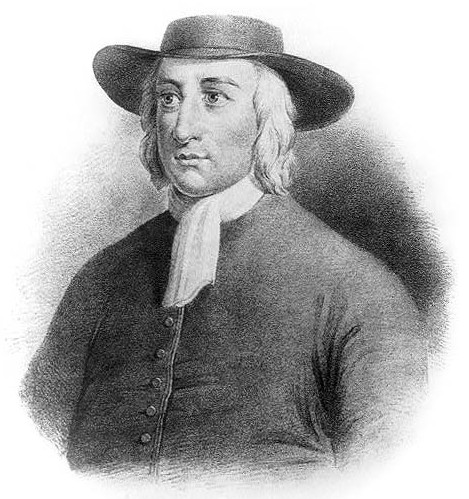
Engraving of George Fox
We often quote George Fox, but do we do so
without regard for what he meant?
One of the most well-known, and to many well-loved, traditional Quaker phrases is “that of God in every one”. Perhaps because of the advance of liberal sensibilities, perhaps because the phrase is used in isolation so often, rather than in its usually-cited context, the meaning of the phrase seems to have become rather woolly, disconnected from how it was originally meant, and – to my mind – less than useful.
Nowadays, people often seem to take it, or use it, to suggest that there is something good about each person, that there is something worthwhile or even laudable about each of us in this strange species we call “human”. That's an idea, as far as it goes, and it's often something worth pointing to, but people struggle with it when relating it to historical (or modern) figures in whom it is difficult to see any redeeming quality – be it serial killers, genocidal dictators, or ethically and morally bankrupt figures in business and politics. It's still valuable even then, as the reminder that there are essential principles to our treatment of people, now enshrined in law in many jurisdictions, that cannot be compromised however awful we think the people in question might be. However, it misses what I consider to be both the essence of what Fox likely meant in that famous quote, and the most useful interpretation we can put on it today.

Saturday, 16 September 2017

The "Transmundane"

A term I often use when discussing spiritual life is “transmundane”, or “the transmundane”. This isn't a word in common currency, so even looking up its definition in a dictionary doesn't necessarily reflect how it is used – especially by me. So I thought it was perhaps time for me to attempt an explanation.
Online dictionaries tend to give a definition along the lines of “beyond the physical world”, or “existing beyond the world”. This is a simple etymological explanation, as one of the meanings of “mundane” – a technical one, rather than the vernacular usage – is “of relation to this physical world, as opposed to a heavenly or spiritual one”. “Trans-” as a prefix, of course, means “beyond”. As an aside, it is very much a development of this meaning, via some specific usages, that leads to the usage in words such as “transgender”, via a sense meaning “across”, but the root meaning is “beyond”. This does not mean that “transgender” means “beyond gender”, and I generally frown on arguments from etymology when determining the meaning of words. Linguistically, I'm very much a descriptivist.

Sunday, 10 September 2017

What the Heck is Non-Theism Anyway?

This seems to be a question that is appropriate, given thought and worry within our Yearly Meeting (that is, Britain Yearly Meeting) at this time. I don't doubt there are other unprogrammed Yearly Meetings with similar concerns. There's a lot of discussion and worry about non-theism, and perhaps as a consequence, much discomfort among some non-theist Friends that we are no longer feeling as welcomed and a part of our Religious Society as we once felt. For there can be no doubt that we've been around for quite a while, but there is an almost sudden increase in worry about us. Whether this is because of increased visibility, or because of concerns being aired by visible or weighty voices among us, I couldn't say. At least, without some in-depth study, and I doubt anyone is going to fund me to do that.
If you enjoy this blog, or otherwise find it worthwhile, please consider contributing to my Patreon. More information about this, and the chance to comment, can be found in the post announcing the launch of my Patreon.