 |
| Photo includes trademarks that are the property of their respective owners. |
Showing posts with label outreach. Show all posts
Showing posts with label outreach. Show all posts
Sunday, 23 June 2019
Quakers and Social Media

Wednesday, 18 July 2018
Thoughts On Outreach

I can understand a lot of reasons for reticence to
engage in outreach. I can understand less the reticence I have seen
among some Friends for others to engage in outreach, in general. You
might be unsure of how to talk about Quakerism. You might not be
generally socially outgoing. You might feel awkward at the idea of
talking about your faith tradition as being a good thing. These are
all valid. Some of them can be overcome, but none of them are things
that you should feel you must overcome. Just because outreach is
something that should happen, doesn't mean that everyone should be
engaging in it. Indeed, I've sometimes seen people doing outreach who
I would much rather weren't, but that's a whole other matter.
Saturday, 26 May 2018
Why Are We So Quiet?
This is written from the perspective of
theologically pluralistic liberal Friends; I make no claims or
assumptions either way of its validity to any other branch/wing of
the Religious Society of Friends.

Is it that we are
shy, culturally, corporately or individually? Our record on outspoken
activism for peace, equality and justice says not.
Is it that we
don't want new people in our Meetings? Maybe that is true for some; I
have certainly heard some comments that seem to amount to that,
reading between the lines. However, a great many of us are concerned
about our numbers, about our sustainability. We cannot continue to do
our work, follow our leadings, if we do not have the resources that
ultimately come from there being people in our Meetings.
Wednesday, 16 May 2018
Equality Is More Than Equal Treatment

What do we mean by equality? Equality before God
was certainly always an important idea for Quakers, with no ordained
clergy. There were those known as ministers, but this was a
description of what they did more than who they were. They travelled
in the ministry, held public meetings aiming to convince those
outside of the Quaker fold, and developed reputations for inspired
and powerful ministry in worship. For this, they were known as
ministers, but this was essentially a recognition of certain gifts
and activities, rather than giving them any authority. The source of
authority remained the Spirit itself, and that dwelt equally in all.
Tuesday, 24 April 2018
What Are "The Things Which Are Eternal"?

In my experience,
Friends often seem to use the phrase in a way that is rather
non-specific. Much like “that
of God in every one”, its meaning seems to be in the moment, in
whatever form is useful to the speaker. Usually, it seems to add a
sort of warm fuzz to the idea of getting to know one another, that it
means getting to know one another in a deep sense, rather than a
superficial one. You might know what someone does for living, but it
is knowing them in a deeper way to find out that they paint
landscapes, or write poetry. This is a reasonable distinction to
make, and the idea that we, as Friends, should know one another well
is a laudable one. Is this really “the things which are eternal”?
Certainly, there's a degree to which meanings change with time and
context, especially as society changes – or as our Religious
Society changes.
Sunday, 25 February 2018
The Death of Fox

In either case, I'm afraid you're going to be
disappointed. Rather, it is a reference to The Death of the
Author, an essay by the French
literary critic and author Roland Barthes (it's original French title
itself being a play on the title of Le Mort d'Arthur,
but that's too tangential a path for me to dive down here), and of
the literary theory concepts that derive from it.
The essential principle
of the essay, and the related (but separately posited) theory of the
“intentional fallacy”, is that the author is not the authority
when it comes to the meaning of a piece of work. Once an author has
created a work, they might tell you what their intent was, you might
infer it from other sources, but intent is not the determining factor
of meaning. I don't say that this theory is universally accepted in
the study of literature; I also probably don't understand it
perfectly, not having studied literary theory or analysis, so please
don't rely on my explanation (or lecture me too harshly if you know
it better – I'm glad to learn more, but please keep it friendly).
Tuesday, 20 February 2018
The Spiritual and Moral Imperative of Outreach
 |
| It is not enough for the door to be open. People need to know it is there, and have some idea about where it might lead. |
Some of the arguments for greater outreach that I
see – in fact, if I'm honest, most of them – focus on the fact
our numbers are dwindling, and that there is a practical need to get
more people involved in our Meetings. I feel there should be more
attention given to the spiritual imperative for outreach, and so that
is what I will be presenting in this post.
For the many denominations commonly considered
evangelical, there is a clear justification for their work to bring
others to their faith, and the insistent persuasion, sometimes
veering into badgering, that they tend to employ. The Great
Commission of Matthew 26, for those who do not believe it to have
been fulfilled (preterism being a fascinating subject that I might
return to on an occasion that I feel like doing more research into
Christian stuff), is a clear injunction that does not seem
unreasonable to consider to have been passed on to the whole Church.
From that point of view, attempting to cause as many people as
possible to become Christians is perfectly logical, however
irritating some might find it. Some Christian or Christian-derived
groups even hold the conversion of others to give one some sort of
credit with God, to ensure a better result in the afterlife.
For that matter, in any faith – whether
Christian or not – in which there is an idea of “salvation”, of
a good or bad outcome after death that is largely determined by right
belief (and perhaps right action as well), there is a clear moral
imperative to at least give as many people as possible the
opportunity to come to that right belief and to understand how they
should act, and why. Repugnant as some of the acts it was used to
justify over history might have been, there is a logic of compassion
in trying to bring people “to God” in such a framework.
Wednesday, 31 January 2018
Why I Write a Quaker Blog

Here in Britain Yearly Meeting, we are faced with
a call
to revise our Book of Discipline, which some fear will bring
painful differences to a head. We have a declining, ageing membership
– where anecdotal reports suggest that many of our newly convinced
Friends join us, as members or attenders, in middle age or later. We
have quiet, but increasingly vocal concerns being expressed about the
quality of our discipline in Quaker processes.
In this context, then, I will answer the question
– why do I blog?
Wednesday, 3 January 2018
Spiritual "Zones of Proximal Development"
 |
| We have all of the ingredients we need for our individual and collective development - we just have to recognise them and work out how to put them together. |
ZPDs, as they are more
concisely known, as a way of talking about what it is readily
possible for a given learner to learn. There is what they already
know, what they can already do, and there are those things that would
be a struggle to attempt, and in between is the ZPD, the things that
they can reasonably learn, or the things that they could do with help
and guidance. This is a much simpler idea than communities of
practice – in these last couple of sentences, the fundamentals of
it are covered. Of course, there's more to it than that, but that's
the basics all done. Given, in many spiritual situations, liberal
Quakers' aversion to “teaching”, it might seem hard to apply
this, but I think it has a particular application to spiritual
development that doesn't require any sense of the didactic. It is
this interpretation and application that I intend to explore in this
post.
Monday, 4 December 2017
What Happened to Quaker Missionary Zeal?
 |
| How do we, how should we, share our gift of Light? |
Like many liberal Quakers, the lack of
proselytisation is associated in my mind with some of the
characteristics of liberal Quakerism that I most value: uncertainty
about traditional religious “big questions”, universalism,
theological liberalism. The idea that there is no “one true way”,
that we can all find the spiritual path that is suited to us, and
that this might be found in any number of different faiths. Of
course, these are also factors that would seem pretty strange to many
Friends in the earliest days of the Society; they were absolutely and
definitely Christian, even if that Christianity was fairly orthodox.
Universalist sentiments arose not too long after, from Friends such
as William Penn and Mary Fisher, but they weren't about integrating
different theological backgrounds into the community of Friends;
rather, they were about respecting and valuing other faiths, rather
than dismissing them – but they remained entirely separate and
other, if not entirely “other”.
Friday, 24 November 2017
What Is "That of God in Every One"?
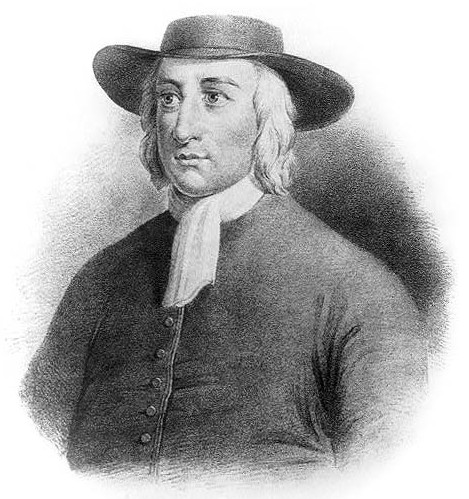 |
| We often quote George Fox, but do we do so without regard for what he meant? |
Nowadays, people often seem to take it, or use it,
to suggest that there is something good about each person, that there
is something worthwhile or even laudable about each of us in this
strange species we call “human”. That's an idea, as far as it
goes, and it's often something worth pointing to, but people struggle
with it when relating it to historical (or modern) figures in whom it
is difficult to see any redeeming quality – be it serial killers,
genocidal dictators, or ethically and morally bankrupt figures in
business and politics. It's still valuable even then, as the reminder
that there are essential principles to our treatment of people, now
enshrined in law in many jurisdictions, that cannot be compromised
however awful we think the people in question might be. However, it
misses what I consider to be both the essence of what Fox likely
meant in that famous quote, and the most useful interpretation we can
put on it today.
Monday, 30 October 2017
Quaker Exotericism
There's a word in the title of this post that most
readers probably won't be familiar with. So, let's clear that up
first. Exoteric is simply the
converse of esoteric –
where the latter refers to things that are secret, or meaningful only
to a select audience, possibly highly theoretical, the former refers
to things that are for a general or universal audience. I suppose
that, in wider use of the English language, there is a cultural
assumption of exotericism, so only the esoteric needs to be referred
to as such. However, it becomes clear as one spends time among
Quakers that, in practice, our discourse and our activities are not
really exoteric.
A recent
piece of written ministry on this blog suggests that this is not
essential to Quaker practice or theory; that our spiritual life
should be accessible to all, not without effort but, perhaps, without
bewilderment. And yet we have our own peculiar language, our own
idioms, largely made up of relatively normal words being used in our
own unique ways. This leading to bewilderment of newcomers or
visitors is hardly surprising.
Thursday, 26 October 2017
Look Beyond
You are not a Quaker because you
are special.
It does not take any special ability or quality to live among Friends.
If your expressions of the Spirit are hard to understand,
That says more about you than it does the Spirit.
It does not take any special ability or quality to live among Friends.
If your expressions of the Spirit are hard to understand,
That says more about you than it does the Spirit.
Everyone can
understand the Light within,
Even if they cannot understand your description of it.
Even if they cannot understand your description of it.
Everyone can
learn to heed the prompting of the Divine,
Even if they cannot describe it in the terms you think proper.
Even if they cannot describe it in the terms you think proper.
The Quaker Way is
not for all, but it is for all sorts.
No formal education or intellectual development prepares you,
To better apprehend what Love requires.
If your Meetings cannot show that power,
To the factory worker and street sweeper,
That is your failing, and not theirs.
No formal education or intellectual development prepares you,
To better apprehend what Love requires.
If your Meetings cannot show that power,
To the factory worker and street sweeper,
That is your failing, and not theirs.
But quiet your
protestation.
Nor should you rush to guilt.
This is not to call you to tear down your house,
To build a new one that is without fault.
It is not to shame you
Or diminish you.
Nor should you rush to guilt.
This is not to call you to tear down your house,
To build a new one that is without fault.
It is not to shame you
Or diminish you.
This is a call to
wake up,
To look beyond your comfortable world,
Of people like you.
To look beyond your comfortable world,
Of people like you.
Written October 2017
Saturday, 30 September 2017
Quaker Week
Once again, Quaker Week is here. This is a week
that Quakers in Britain designate for Outreach, Friends House sets a
theme, and all individual Quakers and Meetings are encouraged to run
activities to help raise the profile of Quakers, inform and interest
the general public, and just generally be “out there” more.
Outreach is a difficult topic for British Quakers.
One of the first things I learned about Quakers could be summarised
as “we do not proselytise”. Of course, I learned that in the
context of liberal Quakers. Evangelical and pastoral branches of the
world Quaker family are quite keen on proselytisation, especially (as
you might expect) the evangelical branch. But liberal Quaker,
especially the sort here in Britain, just don't go out and tell
people they should be Quakers.
Yet, obviously thing we have something worth
finding out about, and thus surely worth sharing. Anecdotally, it
seems that those convinced in adulthood are growing, as a proportion
of our Yearly Meeting, compared to those raised among Quakers. I'm
sure someone has figures on that, but I don't have them to hand; in
any case, that is the impression I, and others I know, have been
getting over the last decade or so, at least in terms of people who
are actively involved in Quaker goings-on. When you add our dwindling
numbers and ageing demographics, it becomes clear that we would be
both selfish and foolish not to try to share this wonderful thing we
have found.
Monday, 24 July 2017
The Marvellous Fudge
Three friends, who
loved to cook, were experimenting one day. They found themselves
making a most marvellous fudge, the likes of which they had never
tasted. Worried it was a fluke, they tried to repeat the recipe, and
found they could reproduce it without great difficulty. Indeed, each
attempt became easier, and produced gradually better results.
At once, the friends
knew they had found something special, and wished to share it. They
disagreed on how to do so, however.
The first friend
approached everyone they knew, telling them how wonderful the fudge
was. They spoke with such enthusiasm, however, and offered the fudge
with such insistence, that people thought they were deranged, and
very few accepted the fudge.
The second friend
committed themselves to make all the fudge they could, and gave it
away without comment. People accepted free fudge offered casually,
and marvelled at it, but could appreciate it only occasionally when
they came across it, as they could not reproduce it.
The third carefully
wrote down the recipe, with detailed instructions. They experimented
further, and made notes on what difference was found in the fudge
with variations in the recipe. They made more fudge, of course, and
offered it to people – but when people expressed appreciation for
it, they offered them their recipe, and their notes. They even
offered to help people when they tried the recipe for themselves.
And some of these
people did try to make it, with help or on their own. And many
succeeded. Some of those that succeeded shared the fudge in the
manner of the first friend, and some in the manner of the second
friend, and some in the manner of the third friend.
Written May 2016
Subscribe to:
Comments (Atom)