Showing posts with label spiritual goals. Show all posts

Tuesday, 11 June 2019

A Salutary Prayer

A frozen bubble rests on a frosty stone or log, catching the light.
Do not give me certainty.
It is seductive and comforting, but it closes my mind.
Give me curiosity.
The desire to know and understand experiences other than my own.
Give me scepticism,
So I challenge what I hear, what I see, and what I know.

Friday, 4 May 2018

True Inspiration

Many Friends find great value in reading the writings of early Friends. This is understandable. Some of it inspiring, some is intellectually very interesting. Some borders on being incoherent, but overall the hit rate is pretty good.
It is important to treat such writings with some caution, however. As early Friends wrote in the heat of the new inspiration they had found, we may read them hoping to catch a little of that inspiration. While it may inspire us, however, it is nothing like the inspiration that led to those writings.

Wednesday, 21 March 2018

What Do We Seek?

A section of a jigsaw puzzle, all of the pieces blank and white. One piece is missing.
What do we seek, we Friends of Truth, we Friends of the Light, we Quakers?
We were Seekers first, before we were Quakers, after all, in the genetic origins of our Religious Society. But then, we were also Ranters, in part. Both strands of thought in that chaotic time of the mid-seventeenth century are seen in us, today. There is even a soupçon of the Levellers and Diggers about our origins, I am quite sure.
If we were Seekers, did we find, and stop Seeking? To suppose that search is over strikes me as the most profound religious hubris. So it is that we continue, as a group, to seek.

Saturday, 23 December 2017

Liberal Quakerism as a "Self Religion"?

A translucent, pale green crystal with a flat bottom rests on a wooden surface. The colour is deeper at the base and gets lighter as you get closer to the pointed tip.
Shall we align our chakras with healing
crystals? The Quaker Way isn't just another
New Age mishmash.
One thing I have seen said, from time to time about liberal Quakerism is that it has become a “self religion”. Usually, this is said by way of criticism, often (but not always) by fairly traditionalist Friends. In this post, I'll be taking a look at what this term means, and the extent to which liberal Quakerism – as I've experienced it – fits that definition, and some thoughts on the extent to which it should.
The term itself is not used entirely consistently. It is widely used in a derogatory way towards “new age” spirituality, even identified with such things, and is also used by the less vociferous critics of Scientology to describe that faith. However, the underlying and original meaning appears to be religions or spiritual paths that aim for the development of the self, with specific reference to new age and other paths that developed in the 70s and 80s. A characteristic that is often derided in these faiths in extreme individualism, the ability to cherry-pick from a range of traditions in your attempt to perfect yourself – though reports rather suggest this is rather less true of Scientology, which is generally considered a self religion. Thus, I tend to feel that the main defining quality of a self religion is the goal of self-perfection – whether the faith says this leads to apotheosis, results after death, or a better life here and now. However, the implications of pick-and-choose are probably very important in the allegation that liberal Quakerism has become a self religion, so that must also be borne in mind.
So, here's the first question: does Quakerism aim for the perfection of the self? If so, how, and to what end?

Saturday, 9 December 2017

Purpose, Practice and Structure

A rather tatty copy of the second edition of the 1994 "Quaker faith & practice"
Quaker faith & practice, essentially the handbook of Britain Yearly
Meeting, devotes considerable space to the structures of different
tiers of the YM, AMs and LMs, the expectations of various roles,
and so forth.
In a recent blog on the website of Britain Yearly Meeting (BYM), Alistair Fuller suggests that we might benefit from re-examining our structures and practices, to make sure that they serve us and our faith, rather than vice versa. As a response to that post, and being British myself, this post is very much written from a BYM perspective. The way different roles are broken down between different positions and committees, and the terms used for them, will vary between different YMs, and will be even more different in programmed traditions. As such, there's no attempt at all to put an international perspective on the specifics – I'd love to hear about how this works differently in different places in the comments section.
As Alistair writes,
“Many of us are deeply familiar with these structures and indeed can find great comfort and reassurance in them. But might there also be something about the shape and structure of our Quaker communities – locally and nationally – that makes them difficult to access for many people?
Is there sometimes something about our ways of working that seems to stifle the Spirit, rather than creating the space for it to flourish and speak?”

Wednesday, 29 November 2017

Spiritual Accompaniment

Two people sat beside a lake in forested mountainous terrain. One points out something to the other.
I had a hard time, sitting down to write this post, with how I was going to refer to what I'm trying to talk about. It's a difficult idea. Three terms came up in conversations, in reading, or in thinking about things. What I'm talking about is certainly related to the priestly vocation, the calling that is considered in mainstream clergy to be a call to the priesthood – but we have no separate priesthood; we have rather a priesthood of all believers, and unlike some other groups with something approaching such a priesthood, we do very little to emphasise a priestly role for some over others in the liberal branch of the Religious Society of Friends. It's also related to the idea of the teaching ministry, a term in mainstream Christianity (and in some less mainstream churches) for the service given by suitably qualified members of the faith community in shepherding and guiding the spiritual development of their companions in their faith. A term perhaps more comfortable for liberal Quakers is spiritual accompaniment, which means much the same – in terms of goals – as teaching ministry, but with less implication of a didactic approach.
Whatever term you might prefer, the idea is this – that sometimes we need help from another person on our spiritual journeys, not just the help of the inward teacher, and perhaps that some people are suited or called to that work, perhaps only for a time.

Friday, 24 November 2017

What Is "That of God in Every One"?

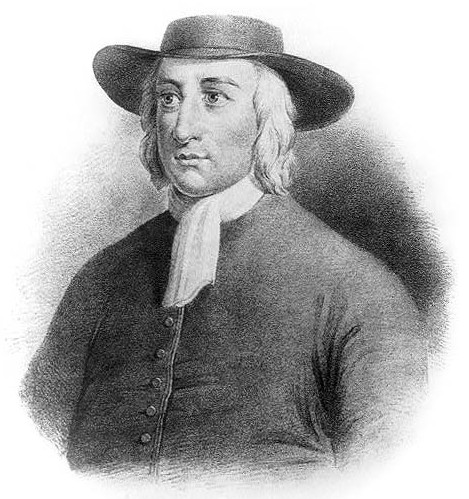
Engraving of George Fox
We often quote George Fox, but do we do so
without regard for what he meant?
One of the most well-known, and to many well-loved, traditional Quaker phrases is “that of God in every one”. Perhaps because of the advance of liberal sensibilities, perhaps because the phrase is used in isolation so often, rather than in its usually-cited context, the meaning of the phrase seems to have become rather woolly, disconnected from how it was originally meant, and – to my mind – less than useful.
Nowadays, people often seem to take it, or use it, to suggest that there is something good about each person, that there is something worthwhile or even laudable about each of us in this strange species we call “human”. That's an idea, as far as it goes, and it's often something worth pointing to, but people struggle with it when relating it to historical (or modern) figures in whom it is difficult to see any redeeming quality – be it serial killers, genocidal dictators, or ethically and morally bankrupt figures in business and politics. It's still valuable even then, as the reminder that there are essential principles to our treatment of people, now enshrined in law in many jurisdictions, that cannot be compromised however awful we think the people in question might be. However, it misses what I consider to be both the essence of what Fox likely meant in that famous quote, and the most useful interpretation we can put on it today.

Saturday, 18 November 2017

The Trouble With Membership

One person uses both hands to clasp the right hand of another person.
There are few matters in British Quakerism that seem to excite as much disagreement as the question of membership. Theological diversity is certainly one, but in my experience membership is certainly up there among the most contentious, though probably still somewhat behind the concern over non-theism.
Membership was not an idea that seemed to matter much – or necessarily be thought of at all – in the early years of the Religious Society of Friends. Accounts vary somewhat as to why it became important, whether it was in order to know who should get material support from a Meeting when they were in hardship, or in order to demonstrate bureaucratic structures to satisfy the secular government (if the government could be said to be secular at that time), or various other explanations. Whatever the reason, it became necessary to identify who was a member, and procedures for bringing people into membership – or indeed removing them from membership. For a long time, in Britain, those born to parents in membership were considered to be in membership themselves, from birth - “birthright membership”; the possibility of only one parent being a member wasn't often a concern, given the fact that marrying someone not in membership was cause to be removed from membership, and society in general being such that children born to unmarried parents were, at least visibly, unusual. I suspect that where a widow came into membership during her pregnancy, the child would be considered a birthright member; I don't know what happened with new members who brought small children with them – it would make an interesting bit of research, but not one I have time for at present.

Friday, 10 November 2017

Belief, Experience, Conception, Communication, Understanding

In an excellent blog post, Craig Barnett (no relation) recently wrote about the limitations of thinking of faith in terms of belief; rather than a conventional, simplistic view of belief leading to action, a better description – especially for Quakers – is of a cycle, practice leading to experience leading to community leading back to practice. Personally, I think that cycle should be bi-directional, but generally I think this is a good model, as far as it goes.
People, however, have a habit of thinking about things, not to mention talking about things (even if sometimes they don't do it in that order). It is when we talk about our experiences that our language, our choice of words and what we mean by them, our choice of phrases and references, brings something else to the fore, which we tend to refer to as “belief” – how we refer to God/the Divine/the numinous/the Spirit/whatever, the characteristics implicit in the terms we use, create the picture of what the speaker believes in.
For many liberal Quakers, however, theology – questions of the nature of the Divine – is a nebulous thing. I have heard many take a partially agnostic view, that whatever the Divine is in incomprehensible to us, fundamentally unknowable, which is a position with which I agree. The words we use don't reflect the kind of certainty that “belief” implies, when used in a religious context; rather, they are our groping after meaning that reflects our experience and attempts at understanding, indefinitely provisional. They are the shadows on the wall of the cave. So, if they don't reflect belief, what do they reflect?

Saturday, 21 October 2017

Standing Up for Quaker Mysticism

“Mysticism”. It's an odd word. You think of “mystic” as a noun, and you might get a lot of odd mental images – fakirs and gurus, new age crystal-power proponents in billowing robe-like dresses, and maybe, if you happen to know about them, perhaps Christian ascetics on pillars in the desert. You will find people talking about the Religious Society of Friends as a mystical tradition, but rarely and obliquely in our official literature. Are we mystical, and if so, why don't we talk about it much?
A good starting point, that may say much about the matter, is consider the general meanings attributed to “mysticism”. Those found in online references fall largely into two areas. The first is that union with God/the Divine/whatever, or otherwise hidden insights, are attainable through contemplation, meditation, self-surrender and so forth. The second, more disparaging sense refers to vague or ill-defined belief, including in the popular supernatural or stereotypical occult. One can clearly see in the first definition why Quaker tradition, especially in the unprogrammed traditions, might be considered mystical, and just as clearly in the second definition why Friends might be reluctant to use it.

Friday, 20 October 2017

Outward Silence, Inward Silence

Silence is a deep part of Quaker tradition. The early Friends met in silence, waiting upon the Spirit, and so we meet today. But the silence is the means, not the end; contact with the Divine is the hope, the aspiration, the goal of Quaker worship. The outward silence is a tool; stillness and absence of distraction makes it easier to reach that place inside you where that eternal and universal Presence that binds and strengthens us all can be known.
Do not rely on the outward silence. Cultivate the inward silence. Learn your way to that feeling within, where you connect to the Presence, where you know the Spirit, where you realise your nature as part of the Divine. Then you can know that life and power wherever you are and whatever you face, be guided by and strengthened by it, and doubts and fears will cease to control you.
Written October 2017

Saturday, 16 September 2017

Love Is Not A Finite Thing

Love is not a finite thing, that is spent and exhausted.
Love flows from the Spirit, and is inexhaustible;
As you live your life in the Spirit, and let its presence grow in your heart,
So too will love flow stronger and brighter in your life.
Think you that giving love here will leave you less to give elsewhere?
Think you that you can run out of love?
You have limited time, you have limited energy,
Your love is not limited.
Love is not like water, poured away and spent or imbibed and expended.
Love is like warmth, and where it is given each to the other,
It is like sharing warmth on a cold night,
Neither becoming cold to make the other warm, but warmth increased for both.
Do not be parsimonious with love, for given well it is never spent.
Yet do not give it unwisely, for if it is not returned, you can be spent.
Whether the love is given to a lover, or in good works in the world,
Given wisely it is returned, and given recklessly it is exploited.
For while you cannot run out of love, you have other resources.
And when you give love, you may expend these.
Do not exclude yourself from your love, or from your care.
In your eagerness to give love, do not overextend yourself.
Do not be jealous of love given.
If you trust your lover's judgement and loyalty,
If you communicate and trust and support,
The gain of others need be no loss to you.
Love is not a zero-sum game.
Written September 2017

Wednesday, 13 September 2017

Tolerance, Acceptance, and Celebration

We often speak of tolerance. Of tolerating difference, of tolerating what is strange to us, of tolerating things that make us uncomfortable.
Often, the spirit calls us to be more than tolerant. Sometimes it calls us to acceptance. To tolerate something is to allow it to exist, to be near you, to be visible, despite your reservations or discomfort. To accept something is to recognise its existence and value, its validity as equal with your own.
Sometimes, the spirit calls us to be more than acceptant. It calls us to celebrate. While acceptance recognises the value and validity of a thing, celebration affirms it, openly rejoicing in its presence.
Celebration allows you to learn more than acceptance, as it requires openness to see more.
Celebration is an act of love, and love given and returned is love increased.
Celebration of difference opens the heart to the spirit in new ways.
Celebrate one another, and celebrate your differences. Celebrate the different people and cultures around you, that you may know them and love them and learn all that can be learned. Celebrate that we share our world, our neighbourhoods, our Meetings and our lives with such richness.
It is better to celebrate than to mourn.
Written September 2017

Saturday, 19 August 2017

On Sin and the Liberal Quaker

Sin isn't something you hear liberal Quakers talking about very much. I suppose that is largely our modern tendency towards non-judgementalism, as well as the increasing tendency to avoid religious language. As most people think of it, talking about “sin” is talking about things that you are religiously forbidden to do, and we don't tend to do that any more.
However, there have been several conceptions of sin, even just among Christian scholarship. The various major branches of the Christian church have their own formal, theoretical conceptions, and practices stemming from these, while theologians have expounded their own views at different points in history.
Thomas Aquinas held sin to be contrary to virtue; referencing Augustine of Hippo, his Summa Theologiae describes it as being “word, deed or desire contrary to the eternal law”, seeing this as superior to competing definitions of it as contrary to reason, or as an offence against God. I must admit, with limited background in Christian theology, I find many of distinctions made in this analysis baffling, but an important distinguishing point seems to be that sins are defined and differentiated by the “end and object”, or motive, for the sin. Adultery is differentiated from murder not by the difference in the acts, but in the difference in why they are committed, in what the sinner seeks to get, obtain or induce by committing the sin. However, it does not require that the sinner conceives their act as sinful, and that sin may come from a misplaced desire to do good. Really, the whole text is a work of philosophical logic applied to theology, as much theological writing is, and I wonder if this might be part of the source of the objection to rational approaches to faith among Quakers, now and historically. It is certainly cold to me, and seems vastly inferior to drawing our understanding of the Divine, and of right action, from lived experience. Reason has its place, but cannot supplant that experience. However, I digress…

Saturday, 5 August 2017

What is your Penn's Sword?

I have often heard the story of Penn's sword held up as an example, however apocryphal it might be, of the transformative power of the Spirit in our lives, if we are open to it.
To me, it is much more than that. It raises to each of us a question – what is there, in each of our lives, that we are wearing as long as we can. Perhaps it is profligacy – foreign travel or imported fresh food that harm the environment, vain fripperies to enhance our appearance, or gadgets owned for their own sake, rather than their utility. Perhaps it is hate, wishing harm to others however justified it may seem, or jealousy, wishing others to lose things because we cannot share in them. Perhaps it is pride or ambition, the desire to be lauded or thought indispensable.
What change may the spirit work in each of us, if we let it?
Written May 2017

Tuesday, 25 July 2017

Perfection

No-one is perfect.
No-one and nothing can be.
Do not set impossible goals, do not seek perfection.
That does not mean we should be satisfied with the way things are, for while we are not perfect, and the world is not perfect, and never can be, they can always be improved.
Like an asymptotic function, the limit can never be reached, but can always be approached more closely.
But be wary, Friends! Improvement is not a matter of simple mathematical optimisation. Human outcomes are complex, many-faceted, and often there is no objective way to say “this is the better result”. To make a room better for performance may make it worse for conversation. To make a building more secure may make it less welcoming. To make a person more efficient may make them less sensitive.
Be ambitious for the right change, and do not forget what you haven't thought of.
Written April 2017

Righteous Transformation

I am told that Friends are made uncomfortable when one Friend ministers often, when that ministry feels like a sermon, when it asks what we should be doing, asks whether we are truly doing as we should.
Do we come to worship for comfort? Certainly, I'm sure many of us have experienced a meeting where we came full of doubt, pain, or fear, and we were held, sheltered and uplifted by the Spirit as shown in that meeting, in the ministry of Friends, and in the invisible yet palpable love of the Spirit itself, brought close to us by the faithful waiting of the meeting.
Yet as we are a gathered people, we are not gathered for our own comfort and uplifting. We are gathered to be made a people of God. That does not mean, for us, going through prescribed motions, as in the liturgies of mainstream churches. Nor does it mean merely helping and uplifting one another. Nor is it enough to take the spirit of righteous transformation into the world, exciting our efforts to mend it.
Righteous transformation must begin with us, and is never done with us. None of us shall ever attain our full potential as children of the Light. Faithfulness to that Light means ever striving, within our faith community, to make it reflect light and love, and yes, to comfort those who will benefit from comfort; in our wider community, to relieve suffering and share the fruits of the Light; and also in ourselves, to let the Light fill us, and transform us, and never think we have reached a final destination.
This does not mean that we have failed, or that we are not good enough. Were that so, none could succeed, and none would be good enough. In the Spirit, love flows freely to all who will take it.
Written March 2017

Times and Places

People of many faiths make a physical space for the sacred, be it a temple or church or a simple home shrine. Likewise, people of many faiths set aside time for the sacred, in daily prayers or weekly divine services.
All places are equally holy; no time is more or less divinely appointed than any other. Nonetheless, the discipline of increasing conscious awareness of the divine can be aided by these practices. If you do make use of such practices however, remember two things.
Firstly that these times and spaces are for your benefit, not that of the divine. They are not offered to the divine, nor are they sanctified above other times. Do not become bound to the time or the place, as the divine most assuredly is not so bound.
Secondly that your goal in so doing is to increase your awareness of the divine at all times and in all places. There is nothing wrong with being more aware at certain times and in certain places, provided that those times and places grow, and with them the sense of the divine in your heart.
Written August 2016

Consciousness of the Divine

Be aware of your consciousness of the divine. Discern how it is greater at some times, and vaguer at others. It is not necessary to be always as aware as you can be, but it is helpful in many way to have a generally increased perception of the divine in your life; there are also particular times when it is especially beneficial to bring your consciousness of the divine to a peak.

It is thus a fit goal to increase your consciousness of the divine. There are many ways this can be achieved, including meditation, fasting, and the right study of scriptures and other spiritual texts. Try different things, and find what works for you. Practice and develop these techniques to promote an increasing awareness of the Spirit within and around you, and apply them when it is most important to be aware of the divine. Do not lightly set such practices aside for speed, or for the comfort of others.

Written August 2016
If you enjoy this blog, or otherwise find it worthwhile, please consider contributing to my Patreon. More information about this, and the chance to comment, can be found in the post announcing the launch of my Patreon.