Showing posts with label explaining quakers. Show all posts

Wednesday, 18 July 2018

Thoughts On Outreach

You may be aware that I recently posted some written ministry concerning outreach, asking why we are so quiet. I didn't mean in worship, of course; silent worship with contributions moved by the Spirit is at heart of the Quaker way. I mean how we are in the world beyond our little Meeting communities. I have written somewhat about this before, concerning the spiritual and moral imperative I see in outreach. It seems timely to put down some other thoughts on the matter.
I can understand a lot of reasons for reticence to engage in outreach. I can understand less the reticence I have seen among some Friends for others to engage in outreach, in general. You might be unsure of how to talk about Quakerism. You might not be generally socially outgoing. You might feel awkward at the idea of talking about your faith tradition as being a good thing. These are all valid. Some of them can be overcome, but none of them are things that you should feel you must overcome. Just because outreach is something that should happen, doesn't mean that everyone should be engaging in it. Indeed, I've sometimes seen people doing outreach who I would much rather weren't, but that's a whole other matter.

Sunday, 24 June 2018

The Simple Good News of Friends

There is, in each of us, a part of the Divine.
Through this, each of us can know first-hand the guidance of God, whatever you might call it and however you might think of it.
By what it shows us, we might call it Love or Light.
We do not need special places or people to have access to it, no special rituals or forms of words.
In silent waiting we learn to recognise the promptings of this Spirit.
In waiting together we gain clarity and confidence in our discernment of how it is leading us.

Tuesday, 24 April 2018

What Are "The Things Which Are Eternal"?

A long exposure photograph of a cloudless night sky, showing the path of apparent motion of stars in the sky as the Earth rotates.
“Seek to know one another in the things which are eternal”. It's a popular phrase, made particularly well-known by it's inclusion in Britain Yearly Meeting's Advices and queries, number 18. It falls easily from our lips, and a lot of people seem to put a lot of emotional investment in the idea, but what does it mean?
In my experience, Friends often seem to use the phrase in a way that is rather non-specific. Much like “that of God in every one”, its meaning seems to be in the moment, in whatever form is useful to the speaker. Usually, it seems to add a sort of warm fuzz to the idea of getting to know one another, that it means getting to know one another in a deep sense, rather than a superficial one. You might know what someone does for living, but it is knowing them in a deeper way to find out that they paint landscapes, or write poetry. This is a reasonable distinction to make, and the idea that we, as Friends, should know one another well is a laudable one. Is this really “the things which are eternal”? Certainly, there's a degree to which meanings change with time and context, especially as society changes – or as our Religious Society changes.

Sunday, 11 February 2018

What do Quakers Mean by "Holding in the Light"?

Light breaking through cloud over hills in the countryside.
It is something of a pat phrase, among Quakers, to respond to the difficulty of others by offering to “hold them in the light”. I do not mean by this that we do not do anything else to help people in difficulty, or that such holding is not appreciated. Indeed, it is equally common, in my experience, for Friends to ask others to hold them in the light as they face adversity.
Like many Quaker phrases, however, it serves to obscure the divergence of understanding among liberal Friends. We do not explain what we mean when we use it, and rarely discuss what we mean by it at other times. It is clear that there are a range of meanings Friends ascribe to the saying, and even where people have similar conceptions of the Divine, they may not mean the same thing when they offer to hold someone in the light.
In this post I will explore some of the different interpretations of this phrase that I have come across, looking at what connects them and what differentiates them. I will also, naturally, explain my take on the matter.

Sunday, 28 January 2018

Why Quakers Say "Hope So"

A 19th century painting of Pandora opening her box.
When Pandora opened the box,
Elpis - hope - remained within.
One of the things that people often learn about Quakers, when they learn a few disjointed and poorly explained bits and bobs, is that we “don't vote”. Aside from clearing up the confusion in terms of public elections, this is something that takes some explaining. I remember when I was grilling the first Quaker I met, who didn't seem given to in-depth explanations at the time, she explained that people said “hope so” if they agreed with what was proposed. I asked what they said if they didn't agree, and she clearly couldn't see a way to answer without a deeper explanation. All these years later, now I understand what a difficult position that was, for a Friend who doesn't want to launch into a long and detailed exposition of how Quakers make collective decisions.
Still, “hope so” is an important part of the Quaker liturgy (in Britain, at least), and part of the way our use of language makes it hard for newcomers to understand what's going on. I've written before that we should question such jargon, but saying “hope so” in response to the clerk offering a minute isn't just jargon. It isn't a Quaker code. It is a very meaningful use of language – though that may not be obvious to those new to our way of doing things.
In this post, I will be exploring the Quaker Business Method with specific reference to how a decision is concluded, and a minute agreed. What does it mean when the clerks offer a minute? Why is our traditional response “hope so”, rather than “yes”, when asked if the minute is acceptable? It's not a simple matter, even assuming a basic familiarity with Quaker practices and processes.

Thursday, 18 January 2018

"WHAT Do You Worship?": Worship as an Intransitive Verb

One fairly common response I've come across, when someone has heard an explanation of the silent Quaker Meeting for Worship, has been to ask “but what are you worshipping?” Well, some people phrase it as who, rather than what, but I tend to see it as essentially the same question.
Now, for some Friends, the answer is easy. They believe in a deity that they feel warrants veneration, and so they can say that is what they worship. And yet, they cannot say that and speak for all unprogrammed Quakers. While some may adore and venerate in the silence, not all do – and even for those that do, that is not all they do in the silence.
In this post, then, I shall look at this question, and how the Quaker usage of the word “worship” perhaps challenges received wisdom in terms of English grammar.

Sunday, 14 January 2018

Business Method & Theological Diversity - Mystical Nontheism

This is the fourth and, at least for now, final post in the series Quaker Business Method and Theological Diversity. If you haven't already, you will get the most out of this post if you read the opening post in the series. That post will also include links to all other posts in the series as they are posted. Reading the second and third posts as well would be an advantage, but it's the opening post that's important, as it sets the context.
An image of silhouette of a person in the lotus position, but with images of stars and nebulae filling the silhouette.
I am not a strict materialist. While my experiences of the Divine lead to me conclude that it does not have those characteristics I describe as theistic – personality, however far removed from our own, identity, being willing and able to act directly in the world as we know it – there's certainly something, though I regard it as entirely impersonal. A force of nature, albeit a force for good, rather than a godly figure.
The best description I have ever come up with for this conception of the Divine came as written ministry, and I have never been able to put it better through deliberate action. As such, while it is available as its own post on this blog, I reproduce it here:

Friday, 12 January 2018

Business Method & Theological Diversity - The Conceptionless Conception

This is the third post in the series Quaker Business Method and Theological Diversity. If you haven't already, you will get the most out of this post if you read the opening post in the series. That post will also include links to all other posts in the series as they are posted. Reading the second post as well would be an advantage, but it's the opening post that's important, as it sets the context.
A sun setting over a body of water, with lots of lens flare.
For some Friends, questions about the nature or identity of the Divine are unimportant. At best, they are somewhat interesting diversions, something to jaw over, maybe stimulating some interesting thought; at worst, they are a source of needless division and disagreement – or even, possibly, a deliberate effort to sow discord among Friends.
This does not mean any disregard for the Divine, of course. It would be hard to be any sort of faithful Quaker without a keen regard for the leadings of the Spirit. However, these Friends often consider such questions unresolvable, sometimes even seeing contention over them as simply projections of the egos of those involved.

Wednesday, 10 January 2018

Business Method & Theological Diversity - Strict Materialism

This is the second post in the series Quaker Business Method and Theological Diversity. If you haven't already, you will get the most out of this post if you read the opening post in the series. That post will also include links to all other posts in the series as they are posted.
5 balls suspended in a Newton's Cradle, with the right-most ball lifted and about to fall to strike the next ball.
Having started with the traditional view, it seems appropriate to turn to a conception that seems to be absolutely diametrically opposed to that traditional view, and one that seems to be very much in people's minds when they are worried about the impact of non-theism in our Meetings. It is a position that, in line with my understanding of philosophical terminology (which might be a little off, not being a philosopher), I term “strict materialism”.
Materialism describes schools of thought that hold that matter is the fundamental stuff of reality, and everything else – including mental processes and cognition – are purely results of interactions among material things. I use the term strict materialism to refer to those materialists who most strongly and sceptically reject anything that even smells like a non-material effect, in the absence of strong evidence and a clear explanation. They accept rationally explained, reproducible effects like radio transmissions and the internet, but reject ideas like mind-to-mind contact or other parapsychic phenomena, or such things as spirits and gods.

Sunday, 7 January 2018

Quaker Business Method and Theological Diversity

A photograph of Swarthmoor Hall on a sunny day.
Swarthmoor Hall was a major centre in the early years of
Quakers as an organised movement.
In its origin, the idea behind the Quaker Business Method was very simple, if audacious – that by waiting in silence, with minds turned to both the problem at hand and to God, we could come to know God's will, that we might act based on it. Audacious or not, and whatever uncertainty anyone might express as to whether we truly acted based on divine guidance, we know from experience that it works. It may not work perfectly, and goodness knows not quickly, but done faithfully, it works – and has significant advantages over voting or consensus decision-making.
But we aren't in the early days of the Religious Society of Friends now. Across the liberal wing of the world family of Friends, and in parts of the conservative and pastoral sections as well, conventional Christianity, or any belief in a theistic God, is not a given. Some of those Friends who hold to a conventional, theistic view of God feel uncomfortable undertaking this solemn, religious exercise alongside those who openly do not believe in such a God. This is a situation that will need to be resolved, one way or another, in Britain Yearly Meeting – and I imagine there are similar situations in other liberal Yearly Meetings.

Saturday, 6 January 2018

What We Do In Silence

Mountains and forest seen across a lake.
From the outside, what happens in a Quaker Meeting for Worship is fairly simple, if unrevealing. We sit in silence, and at some point, someone may be moved to stand and speak. But there's a lot more to it than that.
As we sit in our “expectant waiting”, we are not generally entirely passive – not least because absolute passivity is not something that comes easily to people. For centuries, faith communities have developed strategies to help people learn various forms of passivity, leading their way towards it through prayers, mantras and meditation. Not only that, but not all Friends find the best way to make that contact with the Divine is through passivity at all.
In this post, I will be exploring what it is we do in the silence of worship – different ways we bring ourselves to the right state of mind, what that state of mind might be (different for different Friends), and what we do once we have reached it. That is a chronological order, and it might seem appropriate to explore things that way, but I find it most helpful to consider the state of mind first, before looking at how we reach it.

Friday, 24 November 2017

What Is "That of God in Every One"?

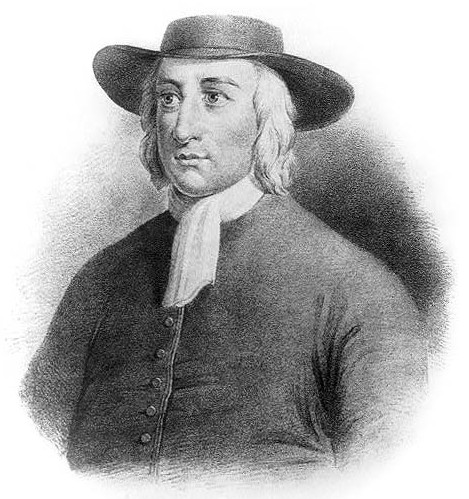
Engraving of George Fox
We often quote George Fox, but do we do so
without regard for what he meant?
One of the most well-known, and to many well-loved, traditional Quaker phrases is “that of God in every one”. Perhaps because of the advance of liberal sensibilities, perhaps because the phrase is used in isolation so often, rather than in its usually-cited context, the meaning of the phrase seems to have become rather woolly, disconnected from how it was originally meant, and – to my mind – less than useful.
Nowadays, people often seem to take it, or use it, to suggest that there is something good about each person, that there is something worthwhile or even laudable about each of us in this strange species we call “human”. That's an idea, as far as it goes, and it's often something worth pointing to, but people struggle with it when relating it to historical (or modern) figures in whom it is difficult to see any redeeming quality – be it serial killers, genocidal dictators, or ethically and morally bankrupt figures in business and politics. It's still valuable even then, as the reminder that there are essential principles to our treatment of people, now enshrined in law in many jurisdictions, that cannot be compromised however awful we think the people in question might be. However, it misses what I consider to be both the essence of what Fox likely meant in that famous quote, and the most useful interpretation we can put on it today.

Saturday, 28 October 2017

What Is Ministry?

One of the hardest things, in my experience, about trying to explain Quaker practice to those unfamiliar with it, is getting down and detailed about Meeting for Worship. Okay, so we sit in silence, and wait for the spirit to move someone to speak; that much sounds simple. I've written before, in some detail, with thoughts on how to tell if the spirit is moving you to speak. After that, though, once someone is speaking, how do we understand what has been said in that spoken ministry? Even assuming that everyone who stands to speak is genuinely moved to speak, there are several ways to think about this.
The most obvious one is at one extreme, that these are genuine, literal messages from God/the Spirit/the Divine/whatever you're calling it. That the words themselves are chosen for you, and the speaker is merely a conduit, with no responsibility for what is said. At the opposite extreme, perhaps the Spirit only gives the germ of an idea, and the compulsion to share it. Then the words are the choice of the person speaking, as they try to express an idea, possibly a very nebulous idea, that has been placed into their mind. I have spoken to Friends who view ministry at each of those extremes.
As is usually the case, however, when there are extreme points of view, there's also the possibility of ideas that lie between them. I suspect that most Friends lie somewhere in that in-between space, as indeed do I, but there's a lot of variation possible. Ultimately, however, all such positions amount to something of the form that ministry is a collaboration between the individual and the Spirit.

Tuesday, 25 July 2017

What is the Quaker Way?

You may ask, what is the Quaker way?
It is a path through a forest, thickly grown, yet with shafts of light breaking through the trees. The path branches often, it loops back upon itself. It brings you to quiet glades, and leads you through brambles. It crosses babbling brooks and roaring rapids. It is sometimes wide, and sometimes narrow; sometimes smooth, and sometimes strewn with roots and rocks.
Sometimes it takes you where you expect, and others it leaves the forest in unexpected direction; sometimes, you end back where you began, but you are never unchanged.
A thousand people can wander it, and each find a different route. And yet, as we each walk our separate way along the path of many paths, we can always reach out our hands and touch one another, support one another, tell each other of our journeys.
Though the path is different for each of us, we talk it together and in unity. Though we see different things and reach different destinations, we share the path. Even where we cannot agree what may be found in the forest, we know that there is one forest, and one path.
Written May 2016
If you enjoy this blog, or otherwise find it worthwhile, please consider contributing to my Patreon. More information about this, and the chance to comment, can be found in the post announcing the launch of my Patreon.