
Showing posts with label right action. Show all posts
Showing posts with label right action. Show all posts
Saturday, 15 June 2019
Saturday, 18 August 2018

Friday, 6 July 2018
Morality, Action, and Inaction

Written July 2018

Sunday, 10 June 2018
Repentance and Forgiveness
 |
| Like much of our spiritual experience, the Quaker confessional is inward. |
In the last few years, I've listened to Radio 4
less and less. While it has some wonderful content that isn't related
to current affairs, there's a huge amount that is – and current
affairs has gotten rather depressing lately. It would be quite
bothersome to put it on just for the programmes we want and change
station every time a news bulletin comes on. Not that we avoid all
news; we follow a lot of news online, consuming it when we want to,
on our terms. Managing mental health is very important.
Sunday, 18 February 2018
No Hands But Ours

For all change in this world comes through us, you must see.
As I hurt, as I fear, still I know I rely,
Upon care, upon love, those who suffer as I.
For such powers as may seek to watch and to
aid,
Need our hands, need our voice, need our hearts not to fade.
We might wish, we might hope, as we nurse at our scars,
This I know, this I say, they have no hands but ours.
Need our hands, need our voice, need our hearts not to fade.
We might wish, we might hope, as we nurse at our scars,
This I know, this I say, they have no hands but ours.
Sunday, 31 December 2017
New Year(s)

But then, today is a new year, too.
Every day, every hour, every minute is as much a
new year as any other. It may be a cliché, but every day is the
first day of the rest of your life.
When you are moved to make a change in your life,
do not wait for a socially-sanctioned time for such changes. Likewise
do not find things to change just to fall in line with traditions.
The Divine is a surer guide to such things, and
their timing, than any calendar.
Friday, 24 November 2017
What Is "That of God in Every One"?
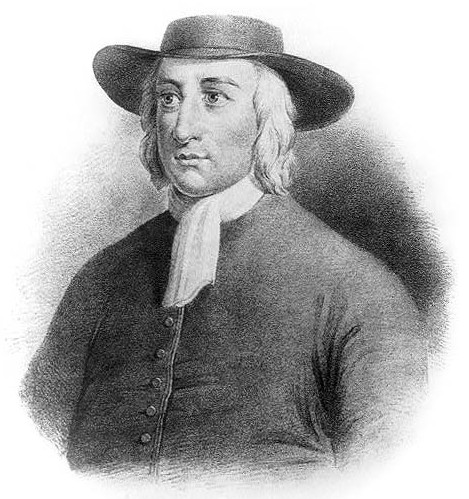 |
| We often quote George Fox, but do we do so without regard for what he meant? |
Nowadays, people often seem to take it, or use it,
to suggest that there is something good about each person, that there
is something worthwhile or even laudable about each of us in this
strange species we call “human”. That's an idea, as far as it
goes, and it's often something worth pointing to, but people struggle
with it when relating it to historical (or modern) figures in whom it
is difficult to see any redeeming quality – be it serial killers,
genocidal dictators, or ethically and morally bankrupt figures in
business and politics. It's still valuable even then, as the reminder
that there are essential principles to our treatment of people, now
enshrined in law in many jurisdictions, that cannot be compromised
however awful we think the people in question might be. However, it
misses what I consider to be both the essence of what Fox likely
meant in that famous quote, and the most useful interpretation we can
put on it today.
Saturday, 4 November 2017
Standing Up for Quaker Groundedness
In an earlier post, I argued that Quaker
practice is essentially mystical. I stand by that point. However,
it is also clear that this is not all there is to Quakerism. While my
meaning of mysticism in that post is quite clear, there are
connotations of mysticism that are unavoidable for many, and that jar
with Quaker teaching. In this post, I will outline what those
connotations are, why they jar in the minds of many Quakers, and why
it is important that they continue to do so.
As I previously discussed, mysticism has the
connotation of some of the more ill-defined spirituality approaches
of the modern age, including New Age practices, conjuring images of
billowing robes and the power of crystals. Even aside from that,
people might think of the stylites, Christian ascetics who lived on
pillars, believing that the mortification of their bodies would lead
to the sanctification of their souls. It may even lead to poorly
understood images of South Asian fakirs, beds of nails, that sort of
thing. Overall, a lack of concern for the material or every day
things of life. Even the understanding of mysticism that I argue fits
Quakers, that of seeking through religious or spiritual efforts to
attain spiritual understanding not accessible to the purely rational
mind, has no obvious connection to the life that we live, to
practical concerns. And yet it is the Quaker experience that our
spiritual life drives decisions and actions in our practical life,
and many if not most would say that the spiritual life is hollow if
not accompanied by the practical life.
Sunday, 29 October 2017
On Reliance On The Spirit
The Spirit is wonderful, marvellous, awesome –
very much in the truest senses of those words. It astounds us,
surprises us, fills us with wonder; we marvel at the things we can
achieve with its assistance; we stand in awe of the things we are
shown in its power.
Saturday, 30 September 2017
Quaker Week
Once again, Quaker Week is here. This is a week
that Quakers in Britain designate for Outreach, Friends House sets a
theme, and all individual Quakers and Meetings are encouraged to run
activities to help raise the profile of Quakers, inform and interest
the general public, and just generally be “out there” more.
Outreach is a difficult topic for British Quakers.
One of the first things I learned about Quakers could be summarised
as “we do not proselytise”. Of course, I learned that in the
context of liberal Quakers. Evangelical and pastoral branches of the
world Quaker family are quite keen on proselytisation, especially (as
you might expect) the evangelical branch. But liberal Quaker,
especially the sort here in Britain, just don't go out and tell
people they should be Quakers.
Yet, obviously thing we have something worth
finding out about, and thus surely worth sharing. Anecdotally, it
seems that those convinced in adulthood are growing, as a proportion
of our Yearly Meeting, compared to those raised among Quakers. I'm
sure someone has figures on that, but I don't have them to hand; in
any case, that is the impression I, and others I know, have been
getting over the last decade or so, at least in terms of people who
are actively involved in Quaker goings-on. When you add our dwindling
numbers and ageing demographics, it becomes clear that we would be
both selfish and foolish not to try to share this wonderful thing we
have found.
Monday, 11 September 2017
The Irrelevance of Life After Death
An aspect of diversity of belief among British
Quakers, that we discuss less than most others, is the question of
what happens after we die. There are likely several reasons for this,
including that, for some, that belief is very important, and
challenging it strikes deeply at their life and, perhaps, what helps
them to maintain hope.
However, it strikes me that the greatest reason is
a distinction in the Quaker motivation to right action. In rhetoric
at least, many mainstream – especially, but not only evangelical –
Christian churches, it is common to talk about the promise of heaven
as a motivation to right action, or at least avoidance of wrong
action, or at least for full and frank confession. In my time among
Liberal Quakers, I have not seen or heard that used, rhetorically or
conversationally. Rather, we see that we should do what is right,
what the spirit urges, what love requires of us, simply because it is
right – or indeed, that we cannot do otherwise, when the leading is
sufficiently strong. We do it because of our conviction that it will
lead to a better world, and that if all acted as we did, it would be
a wonderful result. We do this because if we will not, who will?
I do not mean by this that we are morally superior
to mainstream Christians. I don't even know what it would mean to be
“morally superior”. It is, however, a difference, and one not
unique to us; there are certainly those among many denominations, and
many other faiths, who see right action in this way, as do many
humanists. It is, however, more consistent among Quakers than any
other faith group I have known.
Thus, the idea of what happens after we die, of
life after death, of eternal reward and punishment, is something we
do not speak of much – simply because it is seldom of relevance to
our decisions and actions.
Written September 2017
Wednesday, 23 August 2017
Again, and Again, and Again
Do you come to me asking for rules?
You will not receive them.
Simple algorithms, “if this, then that”,
Are not the fruit of the spirit.
Come to me with questions that are timely,
When you need an answer,
When the choice is before you.
Come to me for inspiration,
For principles,
For paths and pathfinders.
Do not come to me for maps.
For the land you would navigate cannot be
mapped, being ever-changing.
The wisdom you would understand cannot be
stated, being complex beyond your ken.
The rules that determine right action cannot
be written, though you covered every page in every book in all the
world.
You cannot take from me and then never need
me again; if you would know how I would have you act, you must ask
again, and again, and again.
Written August 2017
Saturday, 19 August 2017
On Sin and the Liberal Quaker
Sin isn't something you hear liberal Quakers
talking about very much. I suppose that is largely our modern
tendency towards non-judgementalism, as well as the increasing
tendency to avoid religious language. As most people think of it,
talking about “sin” is talking about things that you are
religiously forbidden to do, and we don't tend to do that any more.
However, there have been several conceptions of
sin, even just among Christian scholarship. The various major
branches of the Christian church have their own formal, theoretical
conceptions, and practices stemming from these, while theologians
have expounded their own views at different points in history.
Thomas Aquinas held sin to be contrary to virtue;
referencing Augustine of Hippo, his Summa Theologiae describes
it as being “word, deed or desire contrary to the eternal law”,
seeing this as superior to competing definitions of it as contrary to
reason, or as an offence against God. I must admit, with limited
background in Christian theology, I find many of distinctions made in
this analysis baffling, but an important distinguishing point seems
to be that sins are defined and differentiated by the “end and
object”, or motive, for the sin. Adultery is differentiated from
murder not by the difference in the acts, but in the difference in
why they are committed, in what the sinner seeks to get, obtain or
induce by committing the sin. However, it does not require that the
sinner conceives their act as sinful, and that sin may come from a
misplaced desire to do good. Really, the whole text is a work of
philosophical logic applied to theology, as much theological writing
is, and I wonder if this might be part of the source of the objection
to rational approaches to faith among Quakers, now and historically.
It is certainly cold to me, and seems vastly inferior to drawing our
understanding of the Divine, and of right action, from lived
experience. Reason has its place, but cannot supplant that
experience. However, I digress…
Subscribe to:
Comments (Atom)