Showing posts with label plain speaking. Show all posts

Monday, 31 December 2018

On Days, Months and Names

A close-up view of a calendar, showing the number of each month as well as its name in six languages, and the days of the month corresponding to days of the week with their English names. Each week is also sequentially numbered. The month of September is fully visible, while October and November are visible in part.
Early Friends quickly shed the common names for days of the week and months of the year, instead referring to them by number. Sunday was “first day”, Tuesday “third day”, and so on. Likewise, July became “seventh month”, November “eleventh month”… you get the idea.
The usual explanation given for this is that the names themselves were of pagan – that is, pre-Christian – origin, giving regard to, variously, Germanic deities (like Woden and Thor), heavenly bodies (like the Sun and Moon), Roman deities (like Janus and Mars), and deified Roman “emperors” (Julius for Julius Caesar, not technically an emperor, and Augustus for his heir, generally recognised as the first emperor). I suspect the last four months, as named in English, would meet with early Friends' approval – except they were misnamed, and naming them in English is much more in line with plain speaking. It would be interesting do delve into early Quaker sources and try to get to the bottom of the practice, but for now we will accept the usual explanation as enough to be getting on with.

Monday, 12 March 2018

Plain Speaking and "Academic" Language

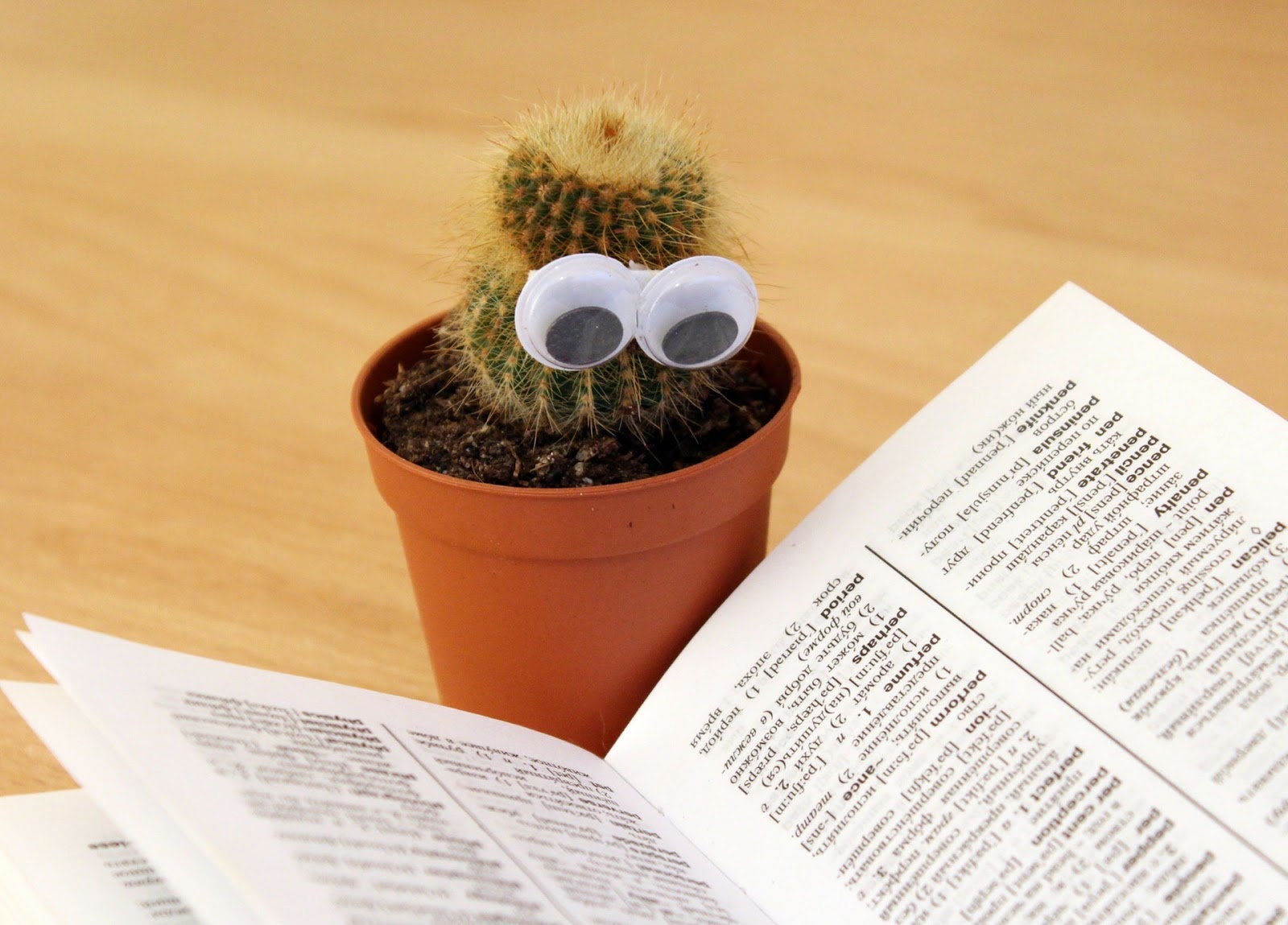
A small cactus with googly eyes, "reading" a dictionary.
Liberal Quaker communities aren't usually terribly representative of the communities in which they are situated. Here in Britain, we tend to be white, culturally middle class, English-speaking (particularly noted in Wales), and educated. There's lots of theories about why this is; I tend to subscribe to the idea that a non-representative community is more forbidding and less welcoming to those who do not already fit into it than those who immediately “fit in”. A black, Asian or other minority ethnic (the currently most acceptable term in this country, abbreviated to BAME) person, in a town that is ethnically diverse, will react the first time they go to a group based on what they see – just as a white person would, but with very different dynamics of social history behind it. If they see 40 people in a room, all white, they will feel that this group is not for them. It may be subconscious, and it may be counterbalanced by other factors (and we'd better hope it will be), but it will be there; none of us is “colour-blind”, however much we might have a misguided aspiration to be so. Similarly, when a person who is culturally working class finds themselves in a room full of middle class accents, when they come to a shared meal and find half the contributions based on couscous and quinoa, they feel that this is a group that is not for people like them.
I emphasise “educated” in this list because it is, in one important way, not like the others. It is something that each of us can potentially change about ourselves, and it is seen as a positive by even the most enlightened social egalitarian. It is not hard to argue that that is it is a good thing that we are mostly quite educated, provided that we include those who are educated by less formal means. We might believe that we are mostly educated because those who join our community who are less educated become more educated in part because of their exposure to Quakers and their living out of Quaker values.
If you enjoy this blog, or otherwise find it worthwhile, please consider contributing to my Patreon. More information about this, and the chance to comment, can be found in the post announcing the launch of my Patreon.